Colonialism as a Root Cause
Yep, it’s violent!

Remember when I wrote about my breakdown in class? And that after our discussion we decided to re-organize the syllabus? (If not, feel free to go back and read February 13th.) The topic my students were deeply curious about was Colonialism, which makes sense given how much that term has been shared over the last few years—and with more urgency, over the last five months. So, let’s talk about Colonialism!
I first truly delved into the concept in 1998 when I started my doctoral studies at Teachers College, Columbia University. While I had witnessed and ‘experienced’ the impacts of colonialism firsthand through teaching at the American Indian Heritage School in Seattle (1992-1994) and living in Guatemala during the summer of 1992, that class was the first time I read about it and looked at it through the lens of post-colonial education and development practices.
The book that gave me my new understanding: Albert Memmi’s “The Colonizer and The Colonized”. Written in 1957, Memmi, an Algerian Jewish writer, reflected on France’s occupation of Algeria and analyzed the societal ills that came when a European power overtook a people and forced their ideas, values, customs, education, etc.. on an already existing (and dare I say sovereign) nation.
If you’ve ever read (my favorite book), Paulo Freire’s “Pedagogy of the Oppressed” you will see clear parallels between these works. While Freire’s worldview reveals to us the deeply problematic and wholly damaging Oppressor-Oppressed dynamic—a true manifestation of Structural Violence—Memmi analyzes the deeply problematic and wholly damaging Colonizer-Colonized dynamic.
A quick peace education POV overview of colonialism:
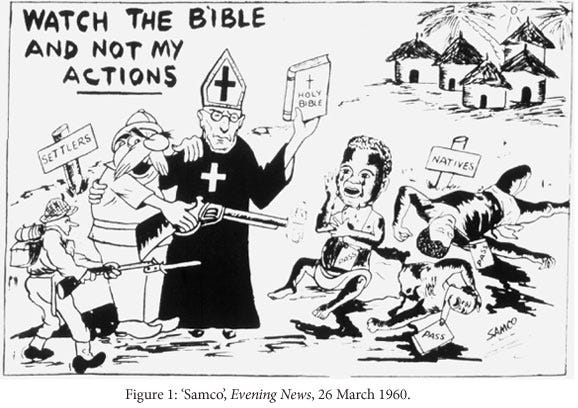
Colonizers throughout time have invaded and laid claim (by any means necessary and with attempts at legitimacy) to various parts of the world, and upon doing so swiftly embarked on campaigns (overt and covert) of dehumanization to create stratified societies. These hierarchies gave the interloper (the colonizer) untold power and allowed for the demonization, exploitation, dehumanization, subjugation, and in many cases, the annihilation of the original inhabitants of the land. Direct Violence was their tool of choice and Structural and Cultural Violence allowed the stratification to become the norm. [Yeah, religion surely helped with that! And education too!] Over time, the colonized internalized their ‘lower status’ accepting their lot, as it were. Their unconscious acceptance (often) meant that they believe(d) this is the way it is/should be/meant to be (or perhaps more accurately, they were inculcated into acceptance). As more interlopers came along and settled in the colony, they were sure to find a way to identify with the colonizers lest they too be treated as poorly as the original inhabitants (colonized). The entire effort of colonization models a spiritual deficiency on the part of the colonizers, who have no problem enacting violence to maintain their position of ‘power over’. Colonialism is deeply linked to militarism; how else can the colonizer maintain their “power” but through violence, fear, war, and destruction?
Does all of this sound familiar? It should.
Your assignment: go ahead and make a list of all the places in the world where horrors exist and you’ll find colonialism as the Root Cause.
Here are a few of my favorite quotes from Memmi:
“The more freely [the colonizer] breaths, the more the colonized are choked.”
“It is impossible for [the colonizer] not to be aware of the constant illegitimacy of [their] status. It is, moreover, in a way, a double illegitimacy. A foreigner, having come to land by the accidents of history, has succeeded not merely in creating a place for [themselves] but also in taking away that of the inhabitant, granting [themselves] astounding privileges to the detriment of those rightfully entitled to them.”
“To different degrees, every colonizer is privileged, at least comparatively so, ultimately to the detriment of the colonized.”
And my super-favorite:
“Such is the history of petty tyrants: each one, being socially oppressed by one more powerful than he, always finds a less powerful one on whom to lean, and becomes a tyrant in his turn.”
Both Freire and Memmi point out that sometimes when the colonized (or oppressed) gain their freedom (or liberation), due to internalizing their oppression/colonization they go on to be oppressors—in horrible form (just look at history and present situations for evidence). [Memmi himself fell victim-ish to this - check out this article.]
To me, the only reasonable response at this point is true decolonization which includes returning land and resources to the people truly indigenous to a given place, paying reparations, opening truth and reconciliation commissions, etc… If you want to read more about those ideas and others, I recommend this article: Decolonization is Not a Metaphor.