

Promoting Biophilia

In 1984, biologist and biodiversity advocate E.O. Wilson wrote a book entitled “Biophilia” wherein he defines biophilia as “the urge to affiliate with other forms of life.” The root words are BIO, meaning life, and PHILIA, loving. Wilson believes that there is an instinctive bond between humans and other living systems. I love that he thinks that. I certainly feel that way—for myself— but I’m not sure I would agree that this sentiment resonates for all people. If we think about it globally, historically, and culturally, we definitely see evidence of many cultures and communities that live (or have lived) in harmony with nature in all its forms. They truly do affiliate (and maybe that’s not a strong enough word) with all forms of life. But we also see lots of circumstances where this is not even close to true.
Wilson developed this idea as a response to the general trend towards Biophobia, where both individuals and groups of people, including entire countries, heads of state, corporations, and religions, seem to be biophobic or afraid of life, afraid of nature, or feel that their only relationship with nature is their right of dominion (domination? exploitation?) over nature. Quite sadly, in some cases, religious beliefs and outmoded ways of thinking are used to justify this biophobia. Worse still, biophobia is deemed fully acceptable because of greed, capitalism, and the need to answer to the oh-so-important shareholders. And at times it’s just our own laziness or desire for convenience that manifests in Biophobic practices, perhaps without us even realizing it.
These two terms point to the internal struggle many of us face individually and people are facing collectively in a modernized and ‘disposable-mindset’ world. We live in an age of progress, wherein a pull to love nature and all that gives us life is up against a pull toward unbridled progress through technology, materialism, and capitalism. Our desire to have things and stuff at any cost alienates us from the ultimate source of life - the Earth. We are well past the time for a great shift in mind and spirit, what David Korten calls “The Great Turning”. A shift from empire to community, from competition to cooperation, and from biophobia to biophilia.
I was born in NYC and raised in a working-class town in New Jersey. My part of New Jersey was very similar to Queens in layout, but I grew up on a tree-lined street and was able to crawl through a hole in a fence at the end of my block to run around and go sledding on the golf course one town over. As a child of the 70s, I spent a lot of time outside, playing on my block with the rest of my Tulip Street posse.
When my birth brother and I were quite young, my urban parents took us camping. I can only imagine how bizarre this must have been for them. Here were these two urbanites (Bronx & Jersey City), both raised in housing projects, taking their kids into the woods for a few days. Thankfully, they did not do it alone. That might have ended badly. This trip was made possible by a friend of my dad’s who was a regular camper, thus we were not flying completely blind. We, of course, had an amazing time. We hiked and swam during the day, ate by campfire, roasted marshmallows, and looked at the stars - an experience often obstructed in our New Jersey town because of the ambient local light.
If I had to put a finger on the point in my life when I became “an outdoor person” and biophilic, it would probably be that trip. My biophilia led me to become a biologist and ecologist, finding ways to experience the wonders of nature in so many ways. (Thanks also to that first camping trip, I became an avid outdoor person - hiking, rock climbing, camping, and mountain biking all across the country. I don’t do much of that anymore but I still love to be outside.)
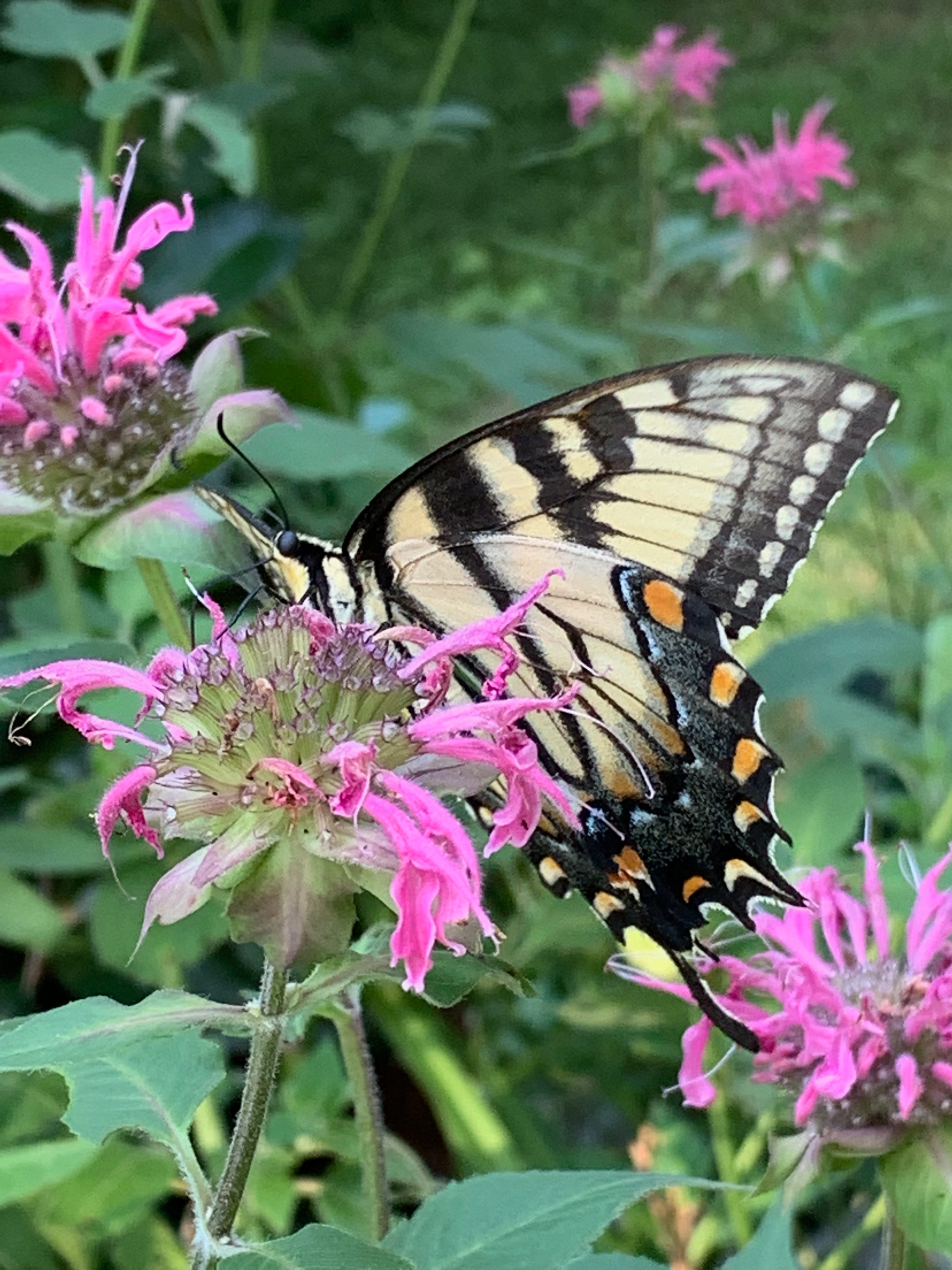
Now that I live and work near the Mahicantuck (Hudson River) and the Catskills, I can see how, for some folks, it can be easy to take for granted the wonders of nature that surround us. From this vantage point, I can also see how easy it is to forget how many people have never even seen a forest. How many children will never climb a tree or watch a sunset while sitting on a boulder or place their feet in a stream. It is easy to forget just how many of our fellow humans never have the choice or chance to interact with what we commonly call nature; never take a walk amongst trees, never hold a worm in their hands, never grow food. And then we must also remember that for many folks, whose interactions with nature are so belaboring, nature is not a refuge but rather a burden. Given all of this, I often think about how we can personally and collectively cultivate biophilia. I’ve implemented many ideas and practices in and out of classrooms over the years and maybe I’ll share them here eventually. But in the meantime, I’m curious: have you found your biophilia? What made it happen for you? And how do you sustain it?