

Protesting Matters
Civil disobedience and the status quo

I am enraged by what is happening at Columbia University (one of my alma maters) and other universities, where students—who are taught to be thoughtful, critical thinkers and agents of change through their higher education studies—are being arrested, suspended, and generally crushed by university leadership, local police, and a prevailing attitude that “one can protest as long as it is not about Palestine”.
I remember doing protests and sit-ins in the 80s against South African apartheid and demanding that my undergraduate institution divest. During that time, we also were part of protests against the proliferation and funding of nuclear arms. I don’t remember exactly how the college responded to our actions—they did eventually divest though—but I know that we were not actively silenced. It was clear that we were building upon a long history of student activism on campuses, including protests that addressed the injustices of the Vietnam War and institutionalized racism. To squelch the voices of young people who are watching—live and in real time—the sanctioned murder of a people funded by US tax dollars seems to me like further evidence that the USA is a faux-democracy.
As I’ve previously mentioned, my research focuses on youth activists and the history of youth activism and while I recognize that public k-12 education in this country is not designed to support young people’s intellectual evolution into changemakers/peacebuilders determined to bring a better world to life, most universities are supposed to do that. And yet, here we are. Stifling dissent and discussion.
Since my original plan was to post something related to Earth Day and Earth Care themes, I want to share another protest story and some ways you can get involved in divestment from Fossil Fuels.
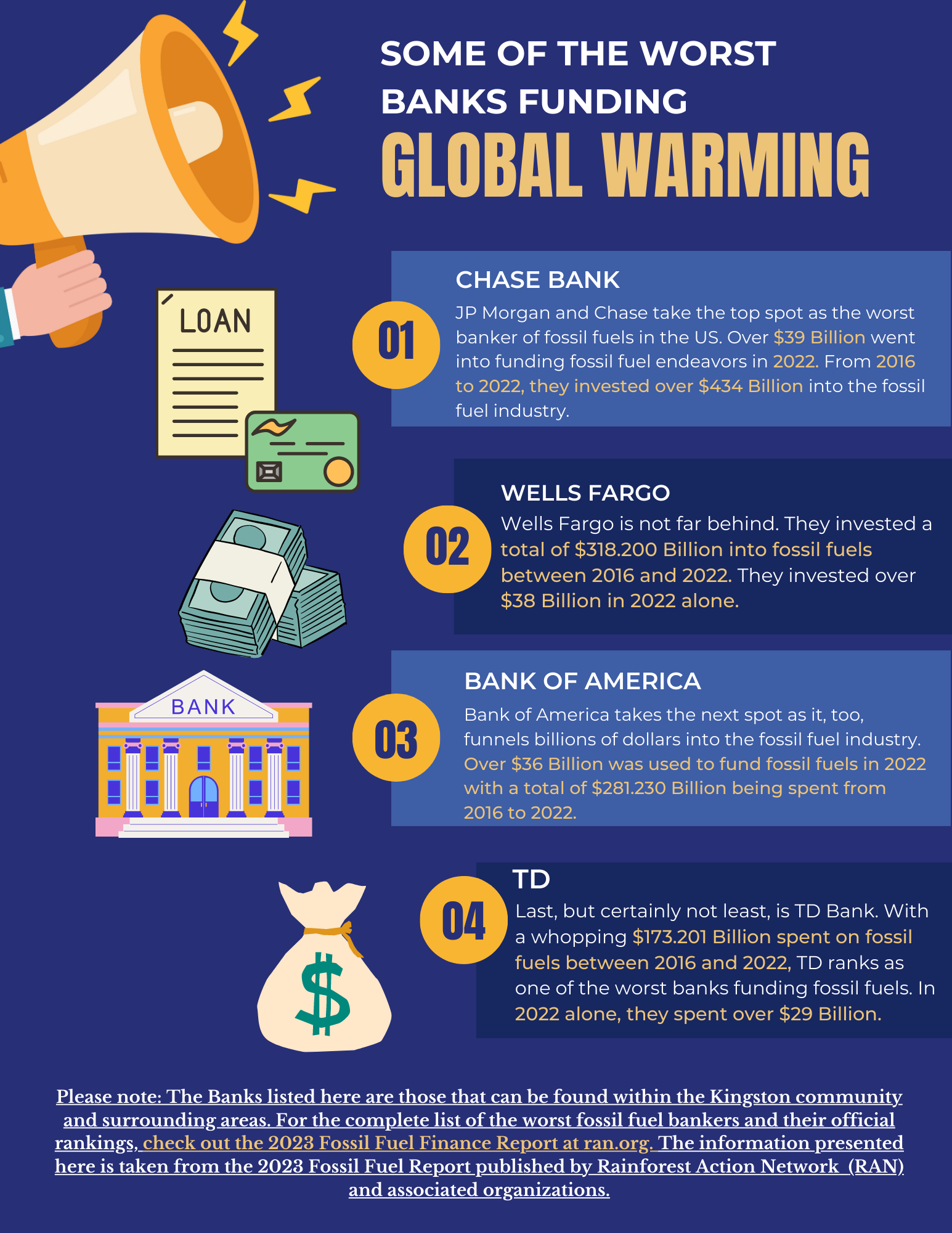
At the start of the fall semester of 2022, I discovered that my place of employment had just signed a contract with Chase Bank for all its accounts and ATMs on campus (and to actively get students to open bank accounts with Chase). I pulled together my data on Chase’s investments in Fossil Fuels, and their role in the direct demise of life on Earth, and met with a VP and the Comptroller. I shared that Chase has invested $434.1 billion in fossil fuels (2016-2022) and that on our campus, young people actually care about the future of the planet (and their prospects of living on it), and thus retaining Chase is against the values we allegedly espouse. They listened. They looked at my charts. But alas, “their hands were tied”, so nothing changed.
I shared this experience with my students and that spring (just about a year ago), we joined in with GreenFaith and Third Act to protest—with a nice group of intergenerational activists—our local Bank of America and its investments in fossil fuels ($279.7 billion). We were just a small part of a global movement pushing to unlock our addiction to Fossil Fuels (and greed) and it felt important to give my students that experience. For many, it was their first protest. And thankfully, not their last.
(Here’s a graphic that two students made as part of a project for our class.)
I have no tidy way to wrap up this post. My mind is racing and my spirit is sad. I remain enraged by the events of the world and the “Palestine exception to Free Speech” and I remain frustrated at the glacial pace of (in)action on reducing the use of fossil fuels. But, I can share that I’ve divested from fossil fuels (no bank accounts, credit cards, or investment accounts with the Dirty Dozen+) and I boycott so many companies (for all the right reasons), that it is now really easy for me to live simply and buy almost nothing!
If you want to explore divesting from Fossil Fuels, my dear friend Michael has put together an amazing workshop. Check it out. I also have a video teaching of the workshop that I will post (soon) to the Peace Education Center of the Hudson Valley website.